Thanksgiving Vocabulary for Kids
Thanksgiving Vocabulary for Kids: Words and Activities introduces words, sentence frames, and games for discussing gratitude, shared meals, and seasonal traditions in English. Children can start with nouns such as turkey, pie, and table, then add verbs and feelings. Link each term to a picture, action, choice, or short exchange. Families outside the United States and Canada can explore the topic without implying that everyone celebrates Thanksgiving.
Core Words and Phrases to Teach
Thanksgiving Vocabulary for Kids: Words and Activities groups connected words. Begin with objects and actions children can see or act out. Introduce abstract terms such as gratitude after a concrete example: “I am grateful for my family.”
family, friend, guest, host, neighbour, community
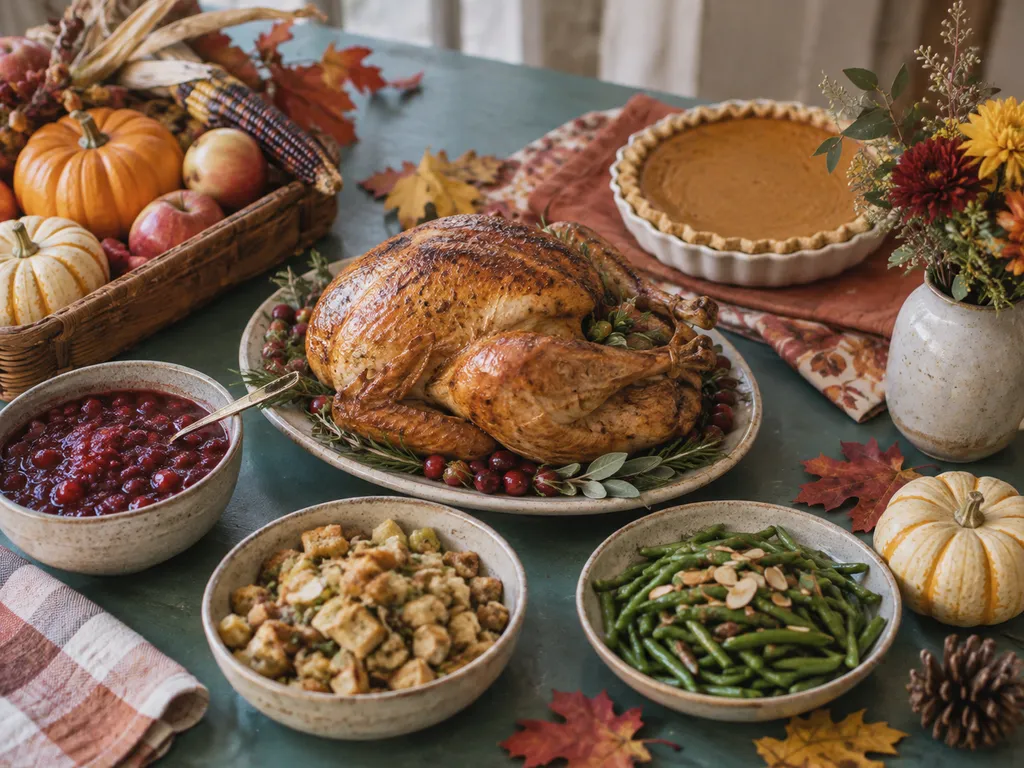
turkey, corn, pumpkin, potato, bread, stuffing, pie, meal, feast
cook, bake, invite, gather, share, serve, thank, celebrate
grateful, thankful, welcome, kindness, tradition, harvest
autumn, fall, Thursday, weekend, home, table
Happy Thanksgiving, Thank you for…, I am grateful for…, Would you like…?, Please pass…
Teach related forms together: thank, thankful, and thanks; or invite, invitation, and guest. Give younger learners familiar nouns and action verbs. Older children can discuss tradition, community, and how people express gratitude.
Using the Words in Context
In Thanksgiving Vocabulary for Kids: Words and Activities, context comes before spelling. Show a picture or mime an action, say the word, and place it in a short sentence. The child changes one part instead of repeating the line mechanically.
- Our family gathers around the table.
- We share a meal with our guests.
- Please pass the corn.
- Would you like some pumpkin pie?
- I am thankful for my friends.
- The host welcomes everyone.
- Some families celebrate Thanksgiving, while others do not.
Build brief exchanges from the models. Ask, “What would you serve?” The child answers, “I would serve bread and corn.” For “What are you grateful for?”, accept a short answer, then expand it: “My family” becomes “I am grateful for my family because they help me.”
Activities for Different Ages
Choose activities by language level, attention span, and reading confidence, not age alone. New learners may need pictures and movement; confident readers can compare traditions or explain a family recipe.
Include different family experiences. A child may design an imaginary meal, compare Thanksgiving with another harvest celebration, or explain why their family does not observe it. The goal is confident English, not a prescribed custom.
Simple Ways to Practise at Home
Revisit Thanksgiving Vocabulary for Kids: Words and Activities through short recall tasks across several days. Sort picture cards, cover their labels, and name each image. Later, use selected words in a menu, dialogue, or voice recording.
Five-minute Table Talk
Place food items or picture cards on a table. The host offers an item: “Would you like some corn?” The guest replies, “Yes, please,” or “No, thank you.” Change roles, then add “Please pass…” and “I am grateful for…”.
Games should make children retrieve words, not merely recognise them. Try “What is missing?” with picture cards, a timed category sort, or a drawing game where one child describes a table for another person to sketch. Finish with a real exchange, such as thanking someone for help.
Common Vocabulary Mistakes
Children may confuse thankful, grateful, and thanks. Model each pattern: “I am thankful for our meal,” “I am grateful for your help,” and “Thanks for helping.” In standard English, we give thanks; we do not usually make thanks.
Teach the words surrounding each term. We say grateful for something and grateful to someone. English speakers usually say celebrate Thanksgiving, without the. When offering food, “Would you like some pie?” sounds more natural than “Do you want a pie?” unless the speaker means a whole pie.
Regional variation is not an error. Both autumn and fall are useful, while food names and recipes differ between homes. If a child uses another familiar term, ask for its meaning and compare it with the target word. This expands vocabulary without treating the child’s language or culture as a problem.
Teaching the Cultural Context with Care
Thanksgiving is mainly associated with the United States and Canada, but it is not universal. Customs, dates, foods, and meanings vary. Present it as one cultural topic among many, not a model every family follows. Children may say, “My family does not celebrate Thanksgiving,” without inventing a tradition.
Avoid reducing the history to a cheerful costume story about Pilgrims and Indigenous people. That version hides conflict and differing community perspectives. Keep a vocabulary lesson focused on present-day language while allowing age-appropriate questions, further reading, and multiple viewpoints.
Gratitude provides a broad connection. Children can name people, places, skills, or acts of care that matter to them. They can compare Thanksgiving with a harvest day, religious festival, family gathering, or community meal. The comparison should encourage curiosity without equating the traditions.
- Read an age-appropriate Indigenous-authored picture book with children ages six to ten.
- Compare one harvest tradition from your family with a Wampanoag perspective.
- Name three common myths, then replace each with one verified historical fact.
- Ask children to notice whose voices are included and whose are missing.
- Practice five Thanksgiving vocabulary words through respectful sentences about gratitude and community.
When a word has several meanings or pronunciations, Cambridge Dictionary is a useful check before turning it into child-friendly examples.
Frequently Asked Questions
What Thanksgiving Words Should My Child Learn First?
Start with words your child can picture or act out, such as family, table, corn, pie, cook, share, and thank. Add two sentence frames: “Please pass…” and “I am thankful for…”. Once secure, introduce harvest, tradition, and community.
How Many New Words Should We Teach at One Time?
Choose a small set your child can encounter repeatedly in one activity. The number depends on reading skill, prior English, and familiarity with the theme. If the child identifies words but cannot use them in a sentence or game, review before adding more. Practise recognition and recall.
Can We Use This Lesson If Our Family Does Not Celebrate Thanksgiving?
Yes. Use Thanksgiving Vocabulary for Kids: Words and Activities as a cultural and language lesson, not a family expectation. Your child can explore different meanings, compare the holiday with a familiar gathering, or plan an imaginary meal. Celebrating, reflecting on the day, and not observing it are all valid experiences.
How Can a Multilingual Child Practise Without Translating Every Word?
Connect English words to pictures, objects, actions, and situations. A child can point to corn, mime serve, or draw a guest arriving at a home. Translation may confirm meaning, but should not be the only route. Compare languages, then use the English word in a complete phrase.
Want to see how these ideas work in a real lesson — try a LearnLink trial lesson.
Stay updated on our latest tips and resources by following us on Instagram LearnLink.